
Digital Resources For Survivors, Practitioners and Educators
These downloadable resources translate research and frontline experience into practical tools for awareness, reflection, journalling, discussion and change. Each visual guide is designed to make complex dynamics, such as coercive control, trauma, and recovery easier to see and talk about. Whether you’re a professional, student, or survivor, you’re welcome to use and share these materials to support understanding, training, and healing.
📥 All resources are free to download.

The Quiet Work of Recovery
This visual honours the subtle, ongoing work of rebuilding a sense of self and connection after harm.

Reclaiming The Body
Explores how survivors reconnect with their bodies after trauma, restoring safety, pleasure, and ownership.

Language That Heals
Shows how everyday words can validate, empower, or retraumatise, encouraging language that restores agency.

Holding Both
Invites reflection on the coexistence of strength and vulnerability, to hold complexity without judgement.

Cycles, Seasons & Recovery
Explores recovery as a cyclical process mirroring nature’s seasons, to remind us that healing takes its own time.
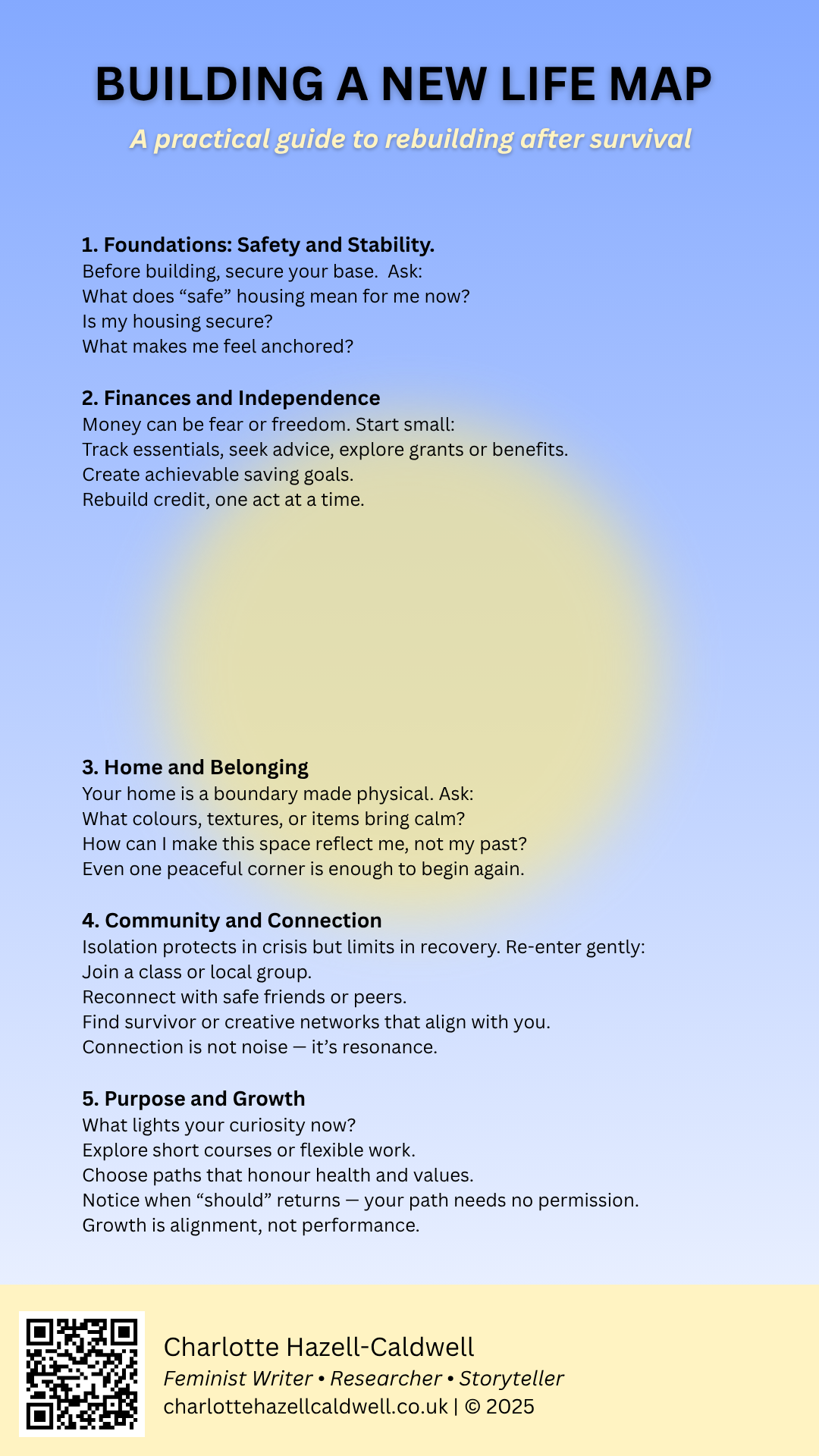
Building A New Life Map
A guided reflection tool for envisioning life after abuse, to map goals, values, and boundaries.
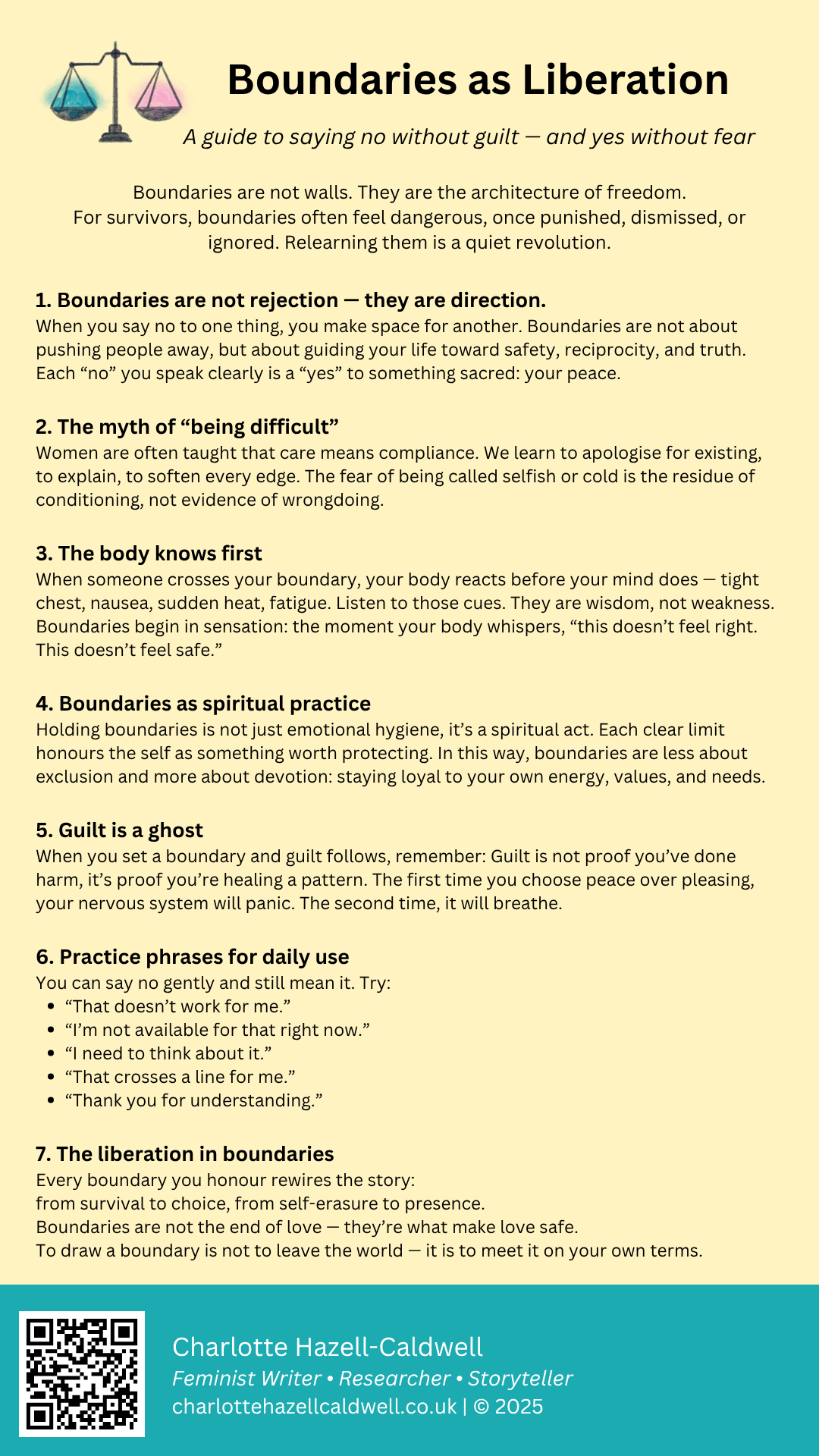
Boundaries as Liberation
Reframes boundaries not as barriers but as acts of freedom, to protect energy, define needs, and create authentic connection.
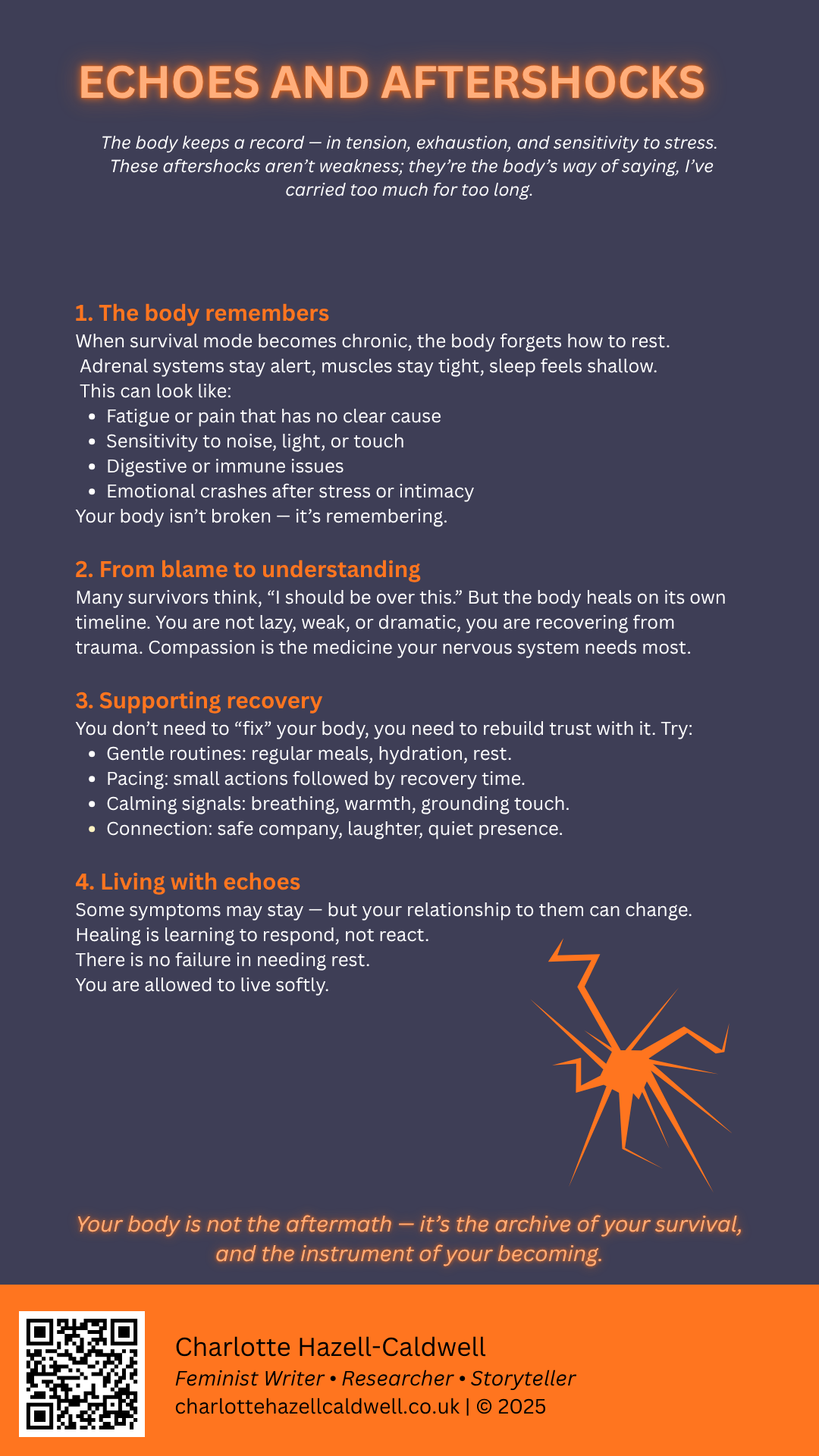
Echoes and Aftershocks
Helping to recognise emotional aftershocks as natural responses within the longer landscape of recovery.

When You’re Ready To Love
Explores the gentle return to trust and intimacy after abuse, offering reflection on readiness, and self-worth.
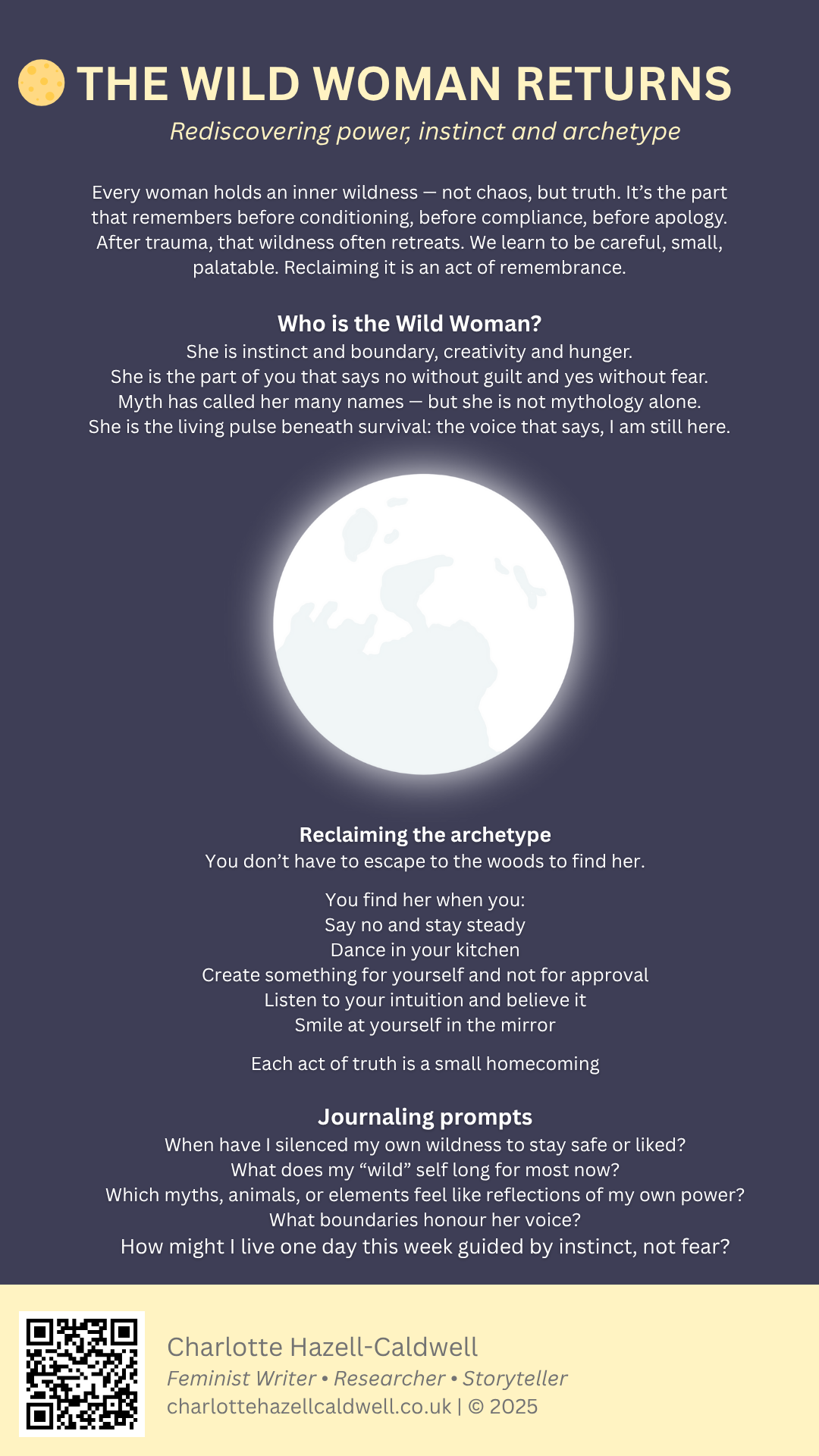
The Wild Woman Returns
Celebrates the reawakening of instinct, creativity, and courage, to reclaim the untamed self after long silencing or control.

Volcano of Coercion & Crisis
Visualises how control and abuse build beneath the surface until crisis erupts, illustrating gradual escalation, and risk.

The Coupling Matrix
Maps how the mechanisms of love, dependence, abuse and control intertwine in abusive relationships.
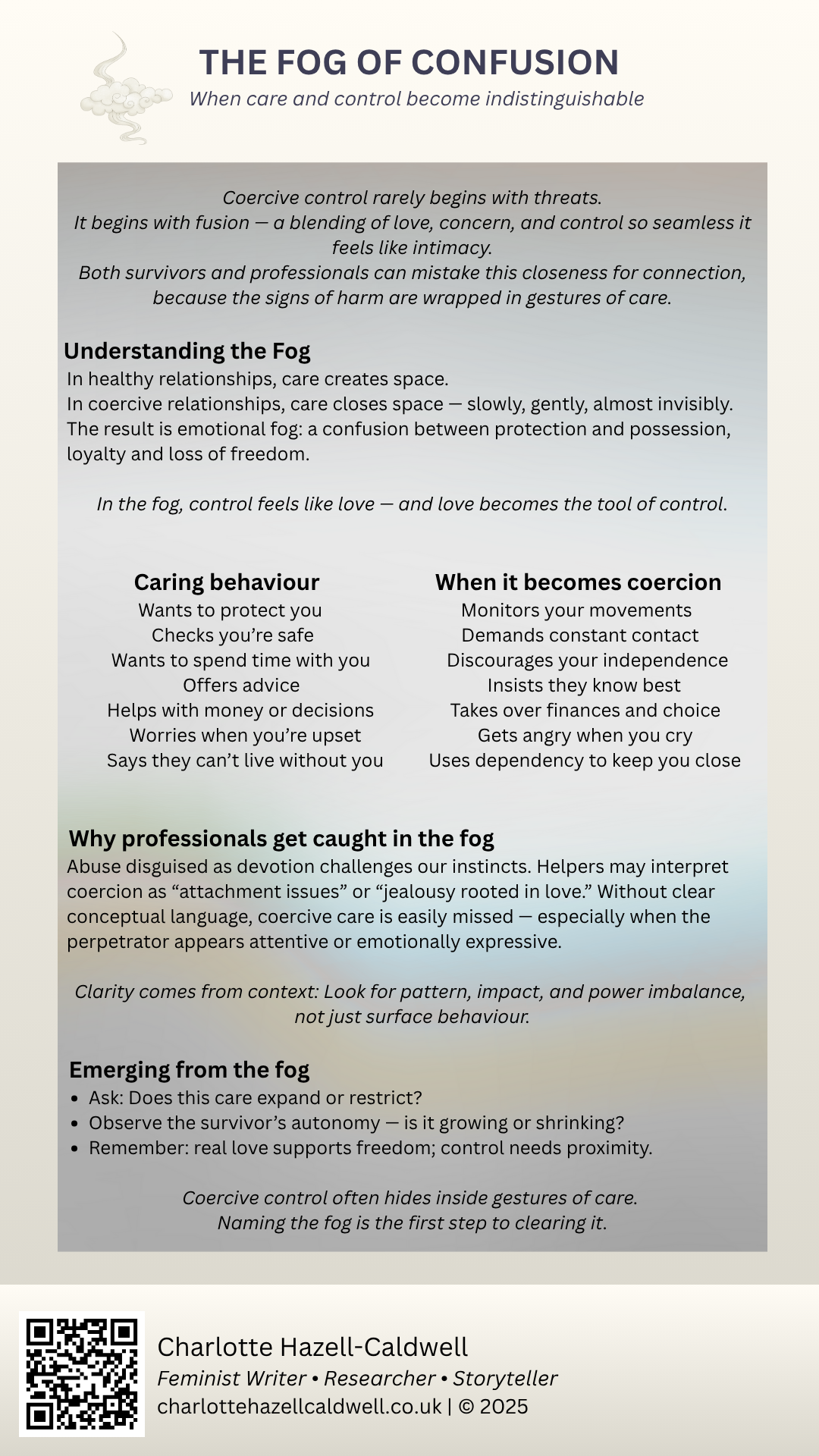
The Fog of Confusion
Depicts the emotional disorientation created by coercive control, and how clarity returns as we reclaim our own reality.
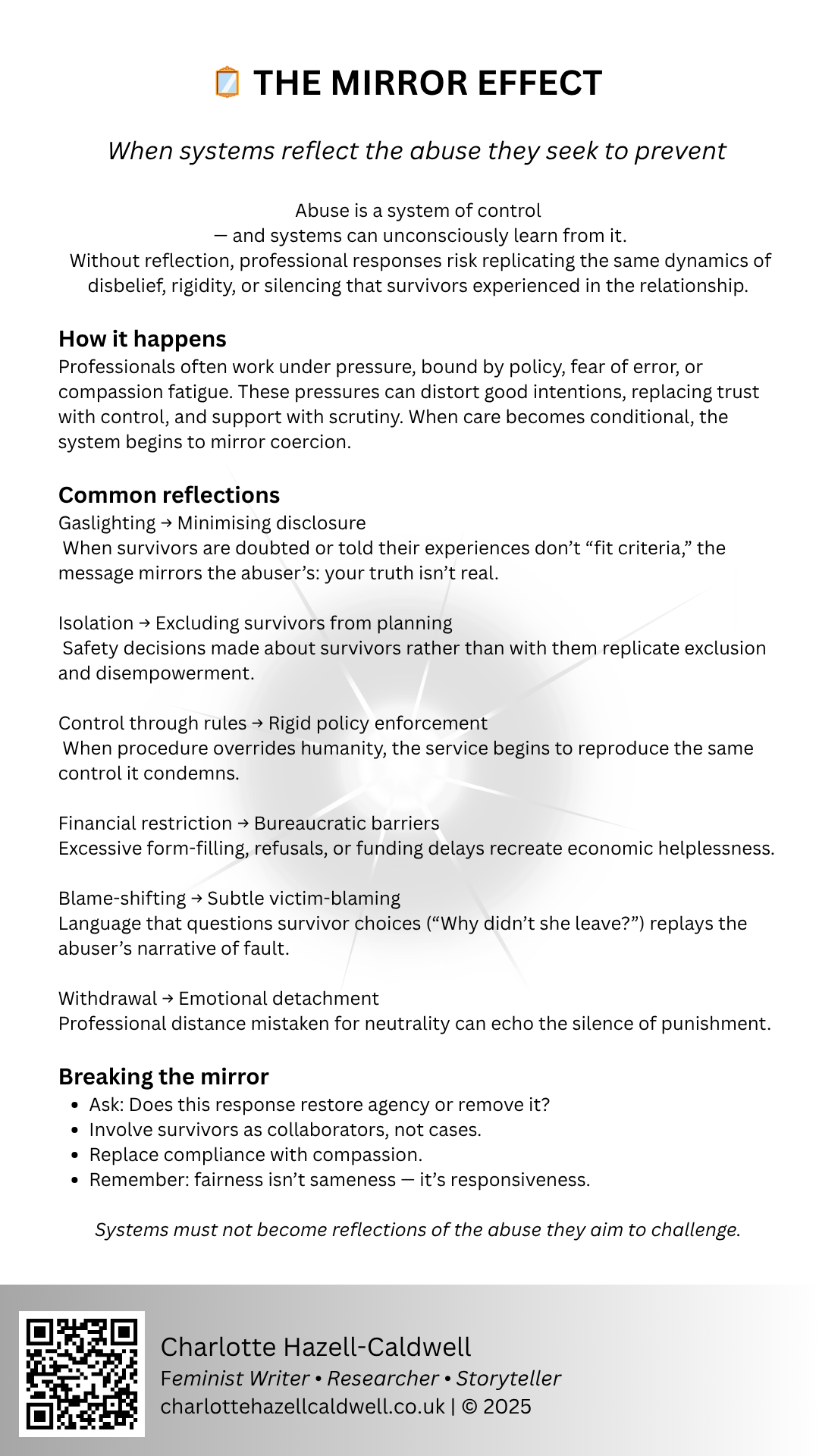
The Mirror Effect
Shows how systems and professionals can unintentionally mirror abusers’ tactics, urging reflective practice.
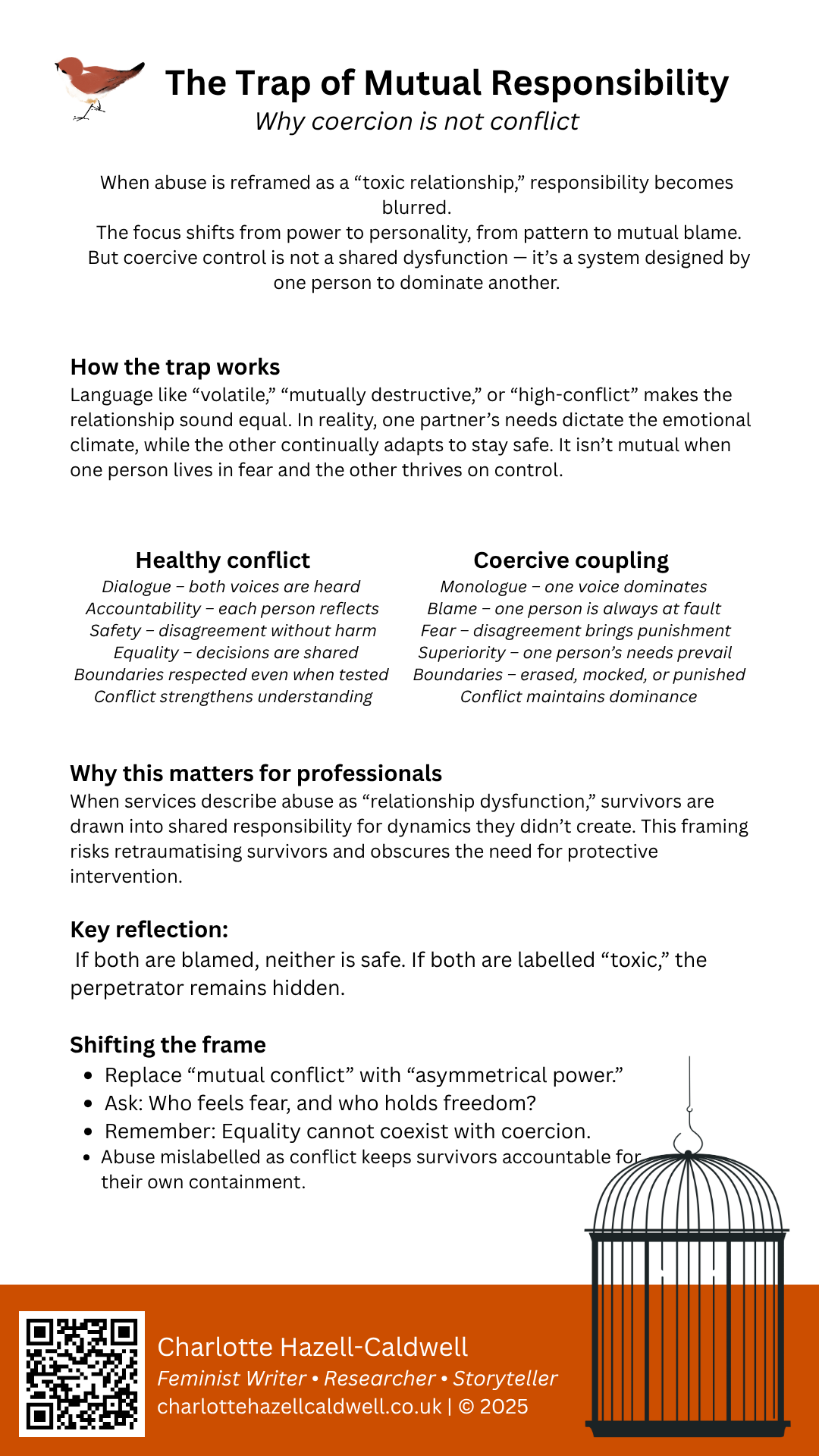
Trap of Mutual Responsibility
Deconstructs the myth of the “toxic relationship” revealing how abuse is often mislabelled as shared conflict.
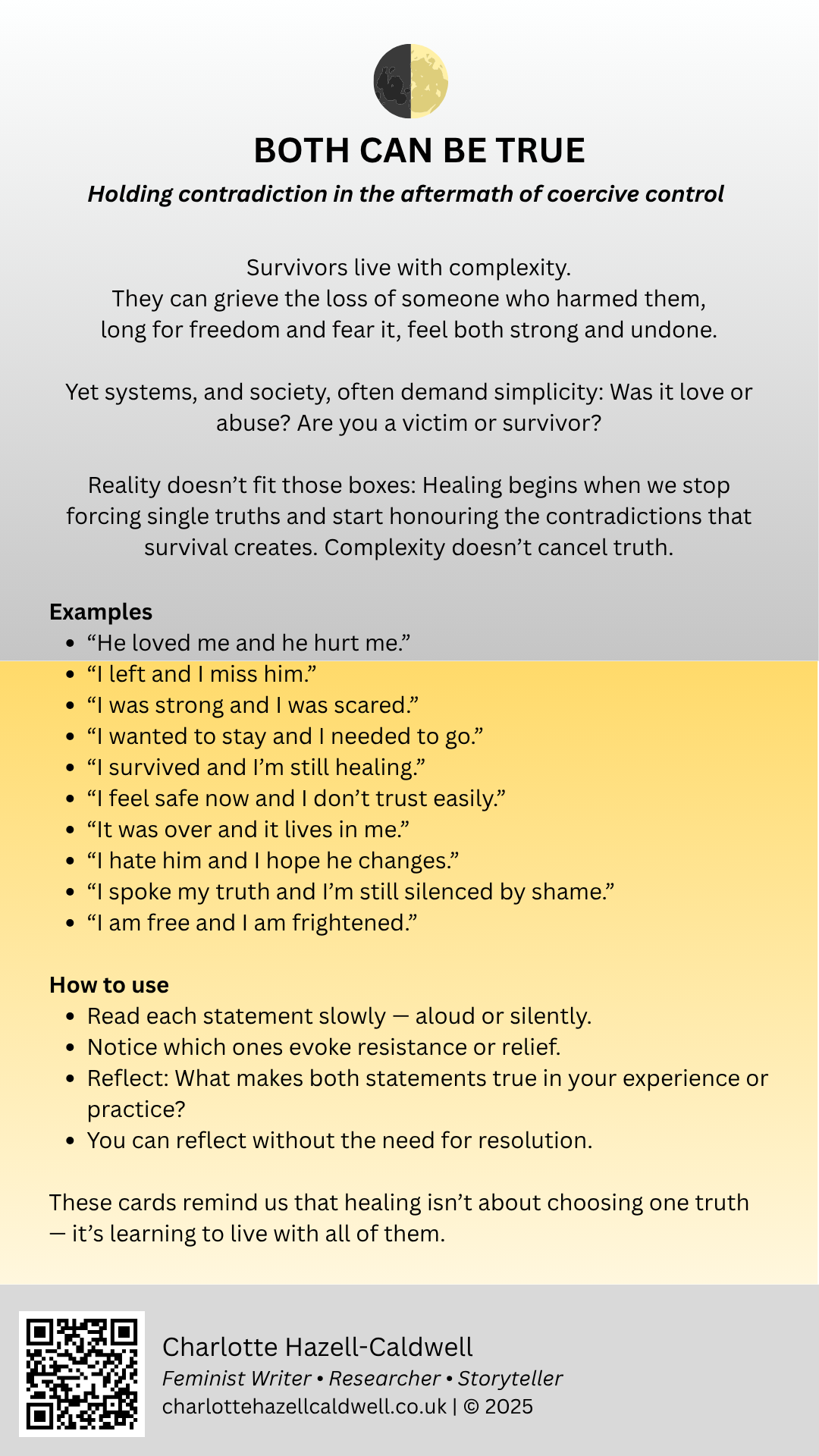
Both Can Be True
Acknowledges the contradictions survivors live with, how love and harm, strength and fear, grief and freedom can coexist.